Online earning is real, but scams are real too.
That is the uncomfortable truth beginners need to understand.
The internet has genuine opportunities: survey platforms, reward sites, freelancing, online teaching, affiliate programs, content creation, digital products, remote jobs, and microtask platforms. But the same space also attracts scammers because people looking for income are often hopeful, urgent, and willing to try new things.
A scammer does not always look like a scammer anymore. Fake earning websites can look polished. Fake recruiters can sound professional. Fake dashboards can show earnings. Fake WhatsApp and Telegram groups can display payment screenshots. Fake platforms can even pay a small amount at first to build trust before asking for a bigger deposit.
That is why avoiding scams is not about being scared of online earning. It is about learning how to separate real opportunities from traps.
GigWorlds exists because platform choice matters. Beginners should not have to blindly chase random earning links across the internet. Starting from vetted platforms gives you a stronger foundation, but you still need to understand the warning signs, follow payout rules, protect your data, and avoid offers that sound too good to be true.
Quick Takeaway
The safest online earners are not the most fearful people. They are the most disciplined.
They understand one simple rule:
Real online earning requires time, skill, attention, platform knowledge, or consistency. Scams usually promise huge rewards, fast results, and easy money with little or no real work.
If a platform or person promises guaranteed income, asks for upfront payment, pushes urgency, hides payout rules, requests sensitive information, or forces you into WhatsApp or Telegram earning groups, slow down immediately.
Online earning can become a real part of your income system, but only when you choose platforms carefully and avoid traps designed to exploit beginners.
1. Why Online Earning Scams Work
Online earning scams work because they target real emotions.
People want:
- Extra income
- Work-from-home options
- Flexible schedules
- Simple tasks
- Student income
- Side earnings
- Passive income
- Fast financial relief
- Global earning opportunities
Scammers understand this. They use that hope to create fake opportunities.
A scam may say:
- Earn daily income from home
- No skill required
- Guaranteed payout
- Withdraw after completing tasks
- Pay a small fee to unlock your earnings
- Join our Telegram group for proof
- Only limited seats available
- Complete simple ratings and earn commission
- Invest once and earn forever
- AI will run the business for you
The scam works because it feels close to what people want.
The safest mindset is not: everything online is fake.
That is too negative.
The better mindset is: online earning is real, but every opportunity must make sense.
2. The Difference Between Real Platforms and Scam Platforms
A real earning platform usually has rules, limits, verification, payout terms, and realistic earning mechanics.
A scam platform usually has hype, urgency, vague promises, and pressure.
A real platform may say:
- Complete your profile
- Follow platform rules
- Earnings vary by country and activity
- Payout methods may vary
- Minimum withdrawal applies
- Verification may be required
- Rewards may take time to process
A scam platform may say:
- Guaranteed income
- Earn huge money instantly
- Deposit money to withdraw
- Pay tax or fees first
- Invite more people to unlock earnings
- Complete one more paid task
- Send OTP or banking details
- Hurry before your account expires
The difference is important.
Real platforms may have conditions. Scams usually hide the real condition until they have your money or data.
3. The Biggest Red Flag: Paying Money to Get Paid
One of the strongest scam signals is being asked to pay money before you can receive money.
Be careful with phrases like:
- Pay registration fee
- Pay withdrawal fee
- Recharge your account
- Unlock your task level
- Deposit to activate payout
- Pay tax before withdrawal
- Complete prepaid task
- Upgrade to premium to receive earnings
Real earning platforms may have normal terms, minimum payouts, account verification, or platform commissions. But suspicious upfront payments to unlock supposed earnings are a major warning sign.
FTC guidance on task scams says people should ignore unexpected job messages on WhatsApp, Telegram, or text and should never pay anyone to get paid or to get a job.
A simple rule:
If you must pay money to receive your earnings, treat it as a scam until proven otherwise.
4. Task Scams: The New Fake Online Job Trap
Task scams are one of the most dangerous online earning scams right now.
They often begin with a message like:
- Part-time job available
- Work from home
- Earn by completing simple tasks
- Rate products
- Boost apps
- Optimize orders
- Like videos
- Complete tasks and withdraw daily
At first, the task may look real. Some scammers even pay small amounts early to build trust.
Then the trap begins.
They may ask you to:
- Deposit money to continue
- Recharge your wallet
- Complete a prepaid task
- Pay to unlock higher commission
- Invest more to withdraw
- Join a Telegram group
- Send crypto
- Keep completing one final task
The fake dashboard may show growing earnings, but the money is not truly withdrawable.
The FTC says task scams create the illusion of earnings and can pressure people to deposit their own money, often in crypto, to unlock supposed payouts. It has also reported that job-scam losses jumped from $90 million in 2020 to $501 million in 2024.
Real online work does not require you to keep paying larger amounts to unlock your own payout.
5. Fake Survey Scams
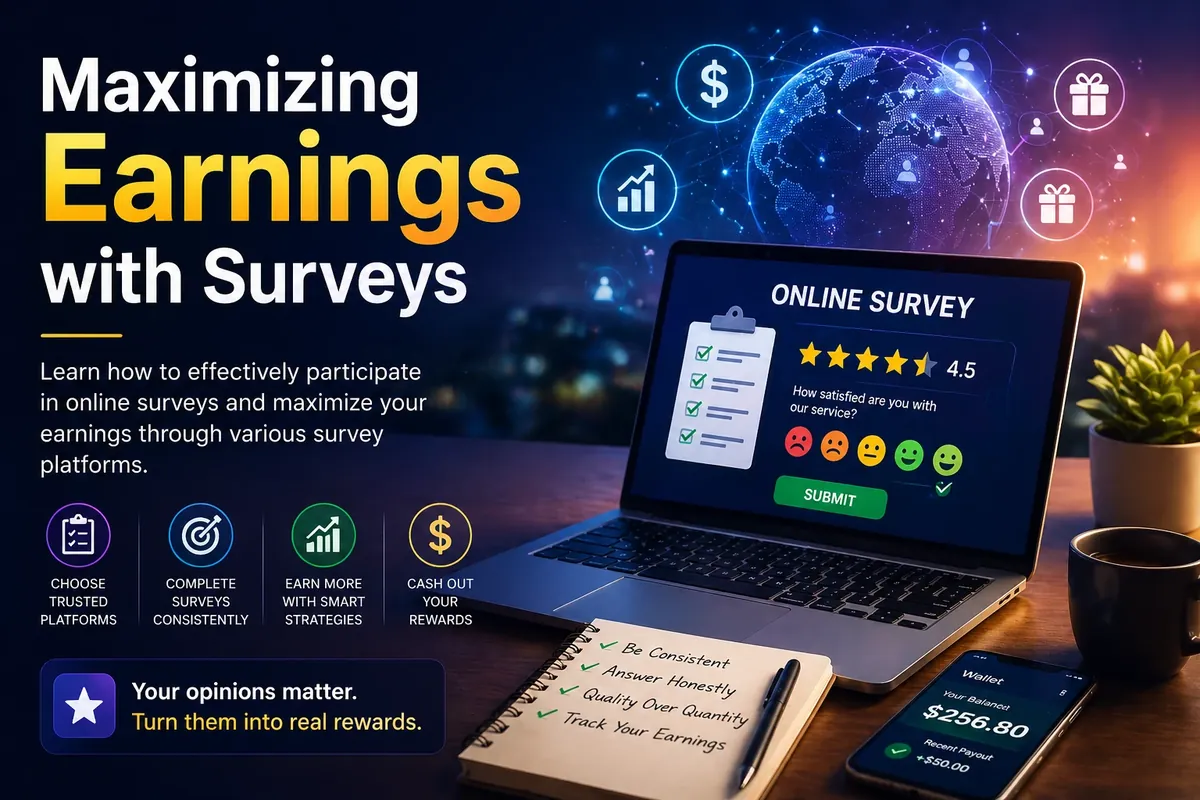
Real survey and reward platforms exist, and serious users can earn from them when they understand profile matching, screen-outs, payout rules, and platform selection.
But fake survey scams also exist.
A fake survey scam may promise:
- A large gift card for a few questions
- Instant cash after a short form
- A reward from a famous brand
- A free phone or product
- A prize if you enter payment details
- A withdrawal after paying a small fee
The goal may be to collect your personal information, card details, email, phone number, or payment data.
BBB guidance warns that too-good-to-be-true survey rewards, such as a $100 gift card for answering a few quick questions, are a common fake survey warning sign.
This is where platform selection matters.
A serious survey earner does not chase random survey links from social media. They use platforms worth taking seriously, complete profiles honestly, understand screen-outs, and withdraw with discipline.
6. Fake Freelancing Jobs
Freelancing is a real online earning path, but fake clients and fake job offers are common.
Be careful if a client:
- Asks you to pay before starting work
- Sends a suspicious check
- Asks you to buy equipment from a specific vendor
- Offers unusually high pay for simple work
- Refuses to explain the project clearly
- Asks for banking passwords or OTPs
- Sends suspicious files or links
- Wants unlimited free samples
- Asks you to move off-platform immediately
- Pressures you to act urgently
Fake-check scams are especially dangerous.
FTC job-scam guidance explains that fake employers may send checks and ask victims to send money elsewhere. When the check later turns out to be fake, the bank may require the victim to repay the amount.
A real client pays for work. A fake client often tries to make you pay first, share sensitive data, or take risk outside the platform.
7. Fake Passive Income Schemes
Passive income is one of the most abused phrases online.
Scammers know people want income that keeps coming without constant work, so they sell dreams like:
- AI automated stores
- Guaranteed Amazon income
- Crypto doubling
- Trading bots
- Done-for-you ecommerce
- Secret passive income systems
- High-yield investment programs
- Rental-income schemes with no risk
- Business opportunities with guaranteed returns
Real passive income usually requires assets, skill, traffic, capital, trust, or time. Fake passive income usually promises huge results with little work and upfront payment.
In 2025, the FTC said the Click Profit ecommerce scheme falsely promised consumers guaranteed passive income from online stores, and later announced a proposed settlement that permanently banned the operators from the industry.
A simple rule:
If someone promises high passive income with little effort, little risk, and upfront payment, slow down.
Real passive income starts active.
8. Crypto and Investment Scams
Crypto scams are common because crypto payments are fast, global, and often hard to reverse.
Be careful with:
- Guaranteed trading profits
- Crypto doubling schemes
- Fake investment dashboards
- Telegram investment groups
- Expert mentor schemes
- Recovery scams
- High-yield investment programs
- Wallet verification traps
- Fake exchange websites
- Pressure to deposit more before withdrawing
The FBI's 2024 IC3 annual report says victims of investment fraud, especially fraud involving cryptocurrency, reported more than $6.5 billion in losses.
This does not mean every crypto-related platform is automatically a scam. It means beginners should be extremely careful with any offer that combines online earning, urgency, guaranteed returns, and crypto deposits.
9. Fake Payment Proof and Screenshot Manipulation
Payment proof can be useful, but it can also be faked.
Scammers may show:
- Edited screenshots
- Fake dashboard balances
- Staged PayPal screenshots
- Telegram group payment images
- Fake testimonials
- Screenshots from other people
- Copied withdrawal proofs
- Fake bank messages
- AI-generated reviews
This is why serious earners understand the difference between:
- Dashboard balance
- Pending credits
- Approved rewards
- Withdrawal request
- Payment received
- Repeat payout history
A platform is stronger when users can actually withdraw repeatedly through usable methods.
But even payment proof should be judged with context. Real proof should not come with pressure, fake urgency, or requests for money.
10. WhatsApp and Telegram Earning Groups
Not every group is bad, but many scams use WhatsApp and Telegram because they are fast, private, and easy to manipulate.
Be careful with groups that show:
- Constant payment screenshots
- Fake members praising the admin
- Urgent investment offers
- Pressure to deposit money
- VIP earning levels
- Fake customer support
- Group admins who delete questions
- No official website or terms
- No clear company identity
- Instructions to recruit others
Scammers often use groups to create social proof. If many people appear to be earning, beginners feel safer. But those members may be fake, paid, or controlled by the scammer.
Trust real platform systems more than group hype.
11. The One More Task Trap
One of the most common scam patterns is the one more task trap.
It sounds like this:
- Complete one more task to withdraw
- Your balance is locked until the next order
- Recharge one final time
- Upgrade to VIP to release payout
- Pay tax before withdrawal
- Your previous task failed, deposit again
- You will lose everything if you stop now
This works because the victim has already invested time or money.
The scammer wants the victim to think: I have already put in so much. I should continue one more step.
That is the trap.
If a platform keeps asking for money to unlock money, stop.
12. The Too Easy for Too Much Money Test
Real online earning usually has a logical reason behind the payout.
A company may pay for:
- Market research
- Customer feedback
- App testing
- Freelance work
- Content creation
- Teaching
- Affiliate referrals
- Ad views
- Digital products
- Useful services
But if someone offers high money for something that has no clear business logic, question it.
Ask:
- Why would this company pay so much for this task?
- What value am I providing?
- Where is the money coming from?
- Why do they need me to pay first?
- Why is everything happening through Telegram?
- Why are the rules unclear?
- Why is the deadline urgent?
- Why can I not withdraw without paying?
If the business logic does not make sense, the offer probably does not make sense.
13. How GigWorlds Helps Reduce Blind Trial-and-Error
The online earning space is noisy.
A beginner searching for earning platforms may find:
- Real platforms
- Outdated platforms
- Low-quality sites
- Fake apps
- Copied blogs
- Misleading YouTube videos
- Scammy Telegram links
- Unrealistic income claims
This is exactly why GigWorlds focuses on platform selection and practical earning guidance.
The goal is not to throw random links at users. The goal is to help users start from platforms worth taking seriously, understand how those platforms work, and avoid obvious traps.
That does not mean every user will get the same results. Country, profile, time invested, platform rules, payout options, and consistency still matter.
But starting from selected platforms is much better than chasing unknown links from random comments, groups, and fake earning posts.
GigWorlds reduces blind trial-and-error. The user still needs discipline.
14. How to Check an Online Earning Platform
Even when starting from good recommendations, serious users should know how to judge a platform.
Check these points:
- Does the platform have a real website?
- Does it explain how users earn?
- Are payout methods visible?
- Is the minimum withdrawal clear?
- Does it have terms and privacy policy pages?
- Does it avoid guaranteed-income claims?
- Does it ask for upfront payment?
- Does it pressure users through urgency?
- Does it have real support or help documentation?
- Are there multiple sources discussing it?
- Does it have a history of paying users?
- Can you realistically use it in your country?
- Are tasks, surveys, or offers clearly explained?
- Does the platform fit your time and profile?
This is not about doubting every platform from zero.
It is about using good platforms intelligently.
15. Protect Your Personal Information
Online earning platforms may ask for basic profile information. That can be normal, especially for survey platforms, freelancing profiles, payment verification, or account security.
But there are limits.
Never share:
- OTPs
- Banking passwords
- Full card details
- Crypto seed phrases
- Remote access to your device
- Unnecessary government ID through random links
- Private documents with unknown people
- Screenshots of sensitive financial information
- Passwords reused from other accounts
Use safety basics:
- Separate email for earning platforms
- Strong unique passwords
- Two-factor authentication where available
- Official app stores and official websites
- Updated browser and device
- Careful link checking
- No random downloads from strangers
Scams often start by getting one small piece of information, then using it to get more.
Protect your accounts like assets.
16. Protect Your Payment Methods
If an earning platform pays you, your payment method matters.
Be careful with:
- Fake PayPal emails
- Fake bank SMS messages
- Unknown crypto wallets
- Suspicious payment links
- Requests to verify wallet seed phrases
- Screenshots asking for account details
- Fake support asking for login access
- Payment processors outside the platform rules
Always check payment activity directly inside your official account, not only from email screenshots or messages.
If a platform claims it paid you, verify the payment in your real PayPal, bank, wallet, or payout account.
17. Protect Your Time
Not every bad opportunity is a scam.
Some platforms simply waste time.
A platform may be low-quality if:
- It rarely credits rewards
- Payout threshold is too high for your activity
- Support never replies
- Tasks redirect endlessly
- Surveys screen out too late
- Rewards are unclear
- Payout options do not work for your country
- The platform changes terms without clarity
- It consumes time without moving you toward withdrawal
Time-wasting platforms are not always criminal, but they can still damage your earning routine.
A serious online earner removes poor performers and focuses on platforms that actually work.
18. Common Scam Warning Signs
Watch carefully for these signs:
Warning Signs
- Guaranteed income
- Unrealistic daily earnings
- Upfront payment
- Withdrawal fee
- Crypto deposit requirement
- Telegram-only support
- WhatsApp job offers from strangers
- Fake dashboards
- No official website
- No terms or privacy policy
- No clear payout method
- Pressure to act fast
- Fake countdown timers
- Copied brand logos
- Poor grammar and strange URLs
- Admin discourages questions
- One more task before withdrawal
- Requests for OTP or passwords
- Payment proof used as pressure
One warning sign may not prove a scam.
Several warning signs together should make you stop.
19. What to Do Before Joining Any Earning Opportunity
Before joining, ask:
- What exactly will I do?
- Why would this platform pay for it?
- Is the payout method clear?
- Is there a minimum withdrawal?
- Does it ask for money first?
- Is the website official?
- Does the platform explain its rules?
- Can I use it in my country?
- Is there real support?
- Are claims realistic?
- Am I being pressured?
- What personal information is being requested?
- Can I start small and test safely?
If you cannot answer these questions, do not rush.
20. What to Do If You Think You Found a Scam
If something feels wrong, stop interacting.
Do not deposit more money.
Do not share more information.
Do not believe recovery agents who say they can get your money back for a fee.
Do this instead:
- Take screenshots
- Save URLs
- Save transaction IDs
- Save chat records
- Block suspicious contacts
- Change passwords if needed
- Enable two-factor authentication
- Contact your bank or payment provider quickly
- Report the scam to the relevant platform
- Report to cybercrime authorities in your country
In the U.S., scams can be reported to the FTC at ReportFraud.ftc.gov, and internet crime complaints can be filed with the FBI IC3.
In India, cybercrime can be reported through the National Cyber Crime Reporting Portal or helpline 1930.
Speed matters when money or account access is involved.
21. A Beginner Scam-Safety Routine
Use this simple routine before trusting a new earning opportunity.
Scam-Safety Routine
Step 1: Pause
Do not join immediately because someone says limited time.
Step 2: Check the Platform
Look at the official website, terms, payout rules, and support pages.
Step 3: Check the Money Logic
Ask why the platform would pay for the task.
Step 4: Check the Payment Rule
If you must pay to withdraw, stop.
Step 5: Start Small
Do not invest serious time or money before testing.
Step 6: Track Everything
Save records of work, credits, withdrawals, and support messages.
Step 7: Withdraw When Eligible
Do not leave unnecessary balances sitting forever.
Step 8: Keep What Works
Use platforms that actually perform and remove the ones that waste time.
This is how serious users protect both time and money.
22. Scam-Safe Online Earning Mindset
The right mindset is balanced.
Do not think: everything online is fake.
That mindset can make you miss real opportunities.
Do not think: every earning site will pay me.
That mindset can make you vulnerable.
Think: online earning is real, but I need the right platforms, the right rules, and the right habits.
That is the GigWorlds approach.
Start from platforms worth taking seriously. Learn how they work. Track real results. Protect your data. Withdraw with discipline. Avoid anything that asks you to pay money to get paid.
23. Final Verdict
Final Verdict
Avoiding scams is not about being afraid of online earning.
It is about becoming harder to fool.
Real online earning exists. Surveys, reward platforms, freelancing, teaching, affiliate content, digital products, and remote work can all be part of a serious earning system.
But scams exist because beginners often chase urgency, guaranteed income, fake proof, and easy-money promises.
The safest path is simple:
Start with better platform choices.
Understand how each platform works.
Avoid upfront-payment traps.
Protect your accounts.
Track real payouts.
Use your time intelligently.
Online earning is not random luck when approached seriously. The right platforms, used with patience, discipline, and payout awareness, can become a real part of your income system.
Ready to explore online earning without falling for random scams?
Use GigWorlds to start with vetted earning platforms, understand how they work, and build a safer earning routine based on real platform knowledge, payout discipline, and realistic expectations.
Do not chase every link. Build your system carefully.
Explore Platforms